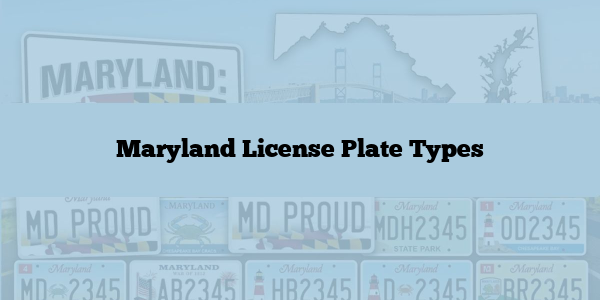
Maryland issues a specific registration plate for every vehicle operating on state roads to display valid vehicle registration. The Maryland MVA dictates these categories based on vehicle class and the specific qualifications of the registered owner. Different plate styles exist to support charitable causes, honor military service, and accurately mark historic vehicles. Assigning the correct tag types ensures full compliance with state traffic laws and local driving regulations.
Selecting the proper Maryland license plate requires checking the exact vehicle specifications and the owner’s personal eligibility. Standard plates suit most passenger vehicles, while specialty designs require additional documentation and specific processing fees. Drivers must verify their medical certification for disability tags or provide exact vehicle age proof for antique status. The Maryland MVA handles the production, distribution, and tracking of every single registration plate directly.
Categories of Maryland License Plate Types
Maryland license plate types divide into several distinct groups to manage vehicle registration across the state. The Maryland MVA assigns a standard plate to most newly purchased passenger vehicles by default without extra steps. Drivers seeking a different appearance or needing to display specific qualifications must request an alternative category. Each category serves a unique legal and administrative purpose under state law for proper vehicle identification.
The primary Maryland plate categories include standard, specialty, personalized, temporary, historic, disability, and organizational plates. Standard plates feature the state graphic and base registration details for everyday passenger cars and trucks. Specialty plates highlight specific causes, universities, or military branches to raise funds or show affiliation. Temporary, historic, and disability plates serve highly specific legal functions based on time, age, or medical needs.
Standard Maryland License Plates
The standard license plate acts as the default registration plate for most passenger vehicles in the state. Maryland currently issues a graphic standard plate featuring the state flag or a simple black and white design depending on the manufacturing batch. These plates contain a combination of letters and numbers randomly generated by the Maryland MVA system.
- Design elements: Every standard Maryland license plate includes a valid registration sticker displaying the month and year of expiration.
- Eligibility criteria: Qualifying for a standard plate simply requires the vehicle owner to successfully title and register a passenger car, truck, or motorcycle in Maryland.
- Required proof: There are no special qualifications beyond standard proof of state auto insurance, identity, and residency.
- Renewal schedule: The standard renewal process occurs every two years, during which the MVA mails a new registration card and sticker.
- Replacement process: If a standard registration plate suffers damage or goes missing, the owner must complete form VR-008 and pay a duplication fee.
Maryland Specialty License Plates
Maryland specialty license plates allow drivers to display symbols representing military service, charities, colleges, or environmental causes. These plates cost more than standard tags because a portion of the fee goes directly to the associated organization or state fund. The Maryland MVA manages the ordering process for every specialty plate Maryland drivers request.
- Military plates: Recognize active duty, veterans, and specific combat decorations like the Purple Heart or Bronze Star.
- College plates: Feature official school logos and colors for institutions like the University of Maryland or Towson University.
- Charity plates: Support various state initiatives, from wildlife conservation to breast cancer awareness.
- Environmental tags: The Chesapeake Bay plate remains highly popular, funding Bay restoration projects through the Department of Natural Resources.
| Plate Category | Examples | Proof Required for Initial Issuance |
|---|---|---|
| Military/Veteran | Purple Heart, Veteran, Medal of Honor | DD-214 or military discharge documentation |
| College/University | University of Maryland, Morgan State | None (Alumni status not strictly verified by MVA) |
| Environmental | Treasure the Chesapeake, Agricultural | None |
| Charitable Causes | Breast Cancer Awareness, Organ Donor | None |
For a complete visual directory of available designs, visit: https://mva.maryland.gov/appointments-online-services
Maryland Personalized License Plates
A personalized plate Maryland residents order allows them to select a specific combination of letters, numbers, or both. The Maryland MVA strictly regulates character availability to ensure messages remain appropriate and easily readable by law enforcement. The agency reviews every custom plate submission and rejects any combination containing profanity or references to illegal activities.
- Character limits: Standard passenger plates allow up to seven characters for a vanity plate.
- Motorcycle limits: Motorcycle plates allow fewer characters due to the smaller physical space.
- Approval process: Owners must check exact character availability on the MVA website before submitting an application.
- Fee structure: The cost includes the standard registration fee plus an additional personalized plate fee.
The application process requires the vehicle owner to submit a completed form detailing the desired character combination alongside the standard titling paperwork. If the MVA rejects the requested vanity plate, the applicant must submit an alternative choice. Approved personalized plates arrive via mail and carry the same legal weight as standard registration plates.
Historic, Antique and Classic License Plates
Maryland historic license plates apply to vehicles that meet specific age and usage criteria. An antique vehicle must be at least 20 years old and maintained primarily for use in exhibitions, parades, and historic vehicle club activities. The state issues distinct historic registration plate designs to separate these vehicles from daily drivers.
- Registration requirements: The process requires the owner to submit photographs of the car and provide a detailed description of its condition.
- MVA inspection: The Maryland MVA reviews applications to confirm the vehicle qualifies for the special historic status.
- Plate placement: Once approved, the historic plate attaches to the rear of the vehicle.
- Commuting restrictions: The state legally prohibits using a vehicle displaying a historic registration plate for daily commuting or general transportation.
- Penalties: Driving a historic-plated vehicle to a standard workplace or grocery store violates state vehicle class laws.
The registration fees for these plates are often reduced compared to standard passenger vehicles, reflecting their limited road usage.
Disability License Plates
Maryland disability license plates provide essential accessibility privileges for drivers or passengers with severe mobility limitations. These plates allow the vehicle to park in designated disability parking spaces. The issuance of these plates relies entirely on medical certification rather than the type of vehicle driven.
- Eligibility criteria: A licensed physician must verify the applicant cannot walk 200 feet without resting or requires a wheelchair.
- Required form: Applicants must complete form MV-145 (Application for Placard/Plate) with the medical certification section filled out.
- Temporary vs. permanent: A temporary injury often qualifies for a temporary placard rather than a permanent disability registration plate.
- Documentation: Required documents include the fully completed medical certification form and the standard vehicle registration paperwork.
The renewal process for permanent disability plates aligns with the standard biennial registration cycle. For specific questions regarding medical documentation requirements, vehicle owners can contact the MVA directly at MVACS@mdot.maryland.gov.
Temporary License Plates
Maryland temporary license plates grant short-term driving privileges when a permanent registration plate is not yet available. Dealerships most commonly issue these temporary registrations, often printed on paper, to buyers driving a newly purchased vehicle off the lot.
- Validity period: Dealer-issued temporary tags remain valid for exactly 30 days from the date of issuance.
- Transit permits: Individuals moving into Maryland may require a temporary transit permit to drive to an MVA office for inspection.
- Extension rules: If the permanent process takes longer, the owner must obtain a formal extension before the temporary registration expires. Driving with an expired transit permit results in severe traffic violations and potential vehicle impoundment.
How to Choose the Right Maryland License Plate
Selecting the correct Maryland license plate depends entirely on the vehicle type and the owner’s specific legal qualifications. Matching the exact vehicle class and owner eligibility ensures the MVA processes the application without delays.
Personal vehicles
Cars used for daily commuting receive a standard plate unless the owner actively applies for a personalized or specialty option.
Commercial vehicles
Require specific weight-class plates that differ significantly from passenger tags based on gross vehicle weight rating.
Military veterans
Should evaluate their discharge paperwork to see if they qualify for honored veteran tags.
Medical needs
Individuals with qualifying medical conditions must prioritize obtaining disability plates to ensure accessible parking.
Older vehicles
Historic car owners must strictly adhere to the 20-year age rule and accept the driving restrictions.
Fees for Different Maryland License Plate Types
Maryland license plate fees vary significantly based on the selected category and the vehicle’s physical specifications. The base registration fee for a standard passenger vehicle relies on the vehicle’s weight, typically ranging from $135 to $187 for a two-year registration cycle.
- Specialty plate fee: Adding a specialty plate incurs an additional charge, usually ranging from $25 to $50 depending on the organization.
- Personalized plate fee: A vanity plate adds a flat $25 fee to the standard registration cost for the initial issuance.
- Renewal fees: Personalized plates require an additional $25 renewal fee per cycle on top of the base weight fee.
- Historic plate fee: Historic plates generally cost less than standard plates due to the restricted usage laws.
- Disability plate fee: Disability plates do not carry an extra fee beyond the standard registration cost.
| Plate Type | Base Registration Fee | Additional MVA Fees |
|---|---|---|
| Standard Passenger | Based on Vehicle Weight ($135-$187) | None |
| Personalized | Based on Vehicle Weight | $25 Initial + $25 Renewal |
| Specialty | Based on Vehicle Weight | $25 to $50 (Varies by design) |
| Historic | Reduced Flat Rate | Non |
How to Apply for Maryland License Plate Types
The application process for Maryland license plate types requires a systematic approach to gather documents, submit forms, and pay required fees. The Maryland MVA mandates specific steps to ensure every vehicle receives the correct registration plate based on state laws.
- Gather documents: Secure the vehicle title, proof of Maryland auto insurance, and valid proof of identity. Specialty plates require extra documentation like military records or vehicle photographs.
- Complete application: Fill out the appropriate MVA application form. Personalized plates require an extra section detailing the desired character combination.
- Pay fees: The MVA requires full payment of the base registration fee and any additional plate fees at the time of application.
- Receive plates: The MVA issues a temporary registration and mails the metal plates to the applicant’s address within a few weeks. Applicants must attach the plates immediately upon receipt.
Frequently Asked Questions
Used car buyers in Maryland often have confusion about lemon law coverage, warranties, and legal rights. These FAQs clear up the most common doubts in simple terms.
What are the different Maryland license plate types?
Maryland offers several distinct registration categories including standard, specialty, personalized, temporary, historic, disability, and organizational plates. Each category serves a specific legal purpose, from identifying standard passenger vehicles to granting parking privileges or honoring military service.
Which Maryland license plate is standard?
The standard Maryland license plate features a graphic design including the state flag or the Chesapeake Bay. The MVA assigns this default registration plate to any passenger vehicle that does not qualify for or request a specialized categorization during the initial titling process.
Can I personalize my Maryland plate?
Yes, the state allows drivers to customize their tags with specific letter and number combinations. Applicants must submit their desired vanity plate configuration to the MVA for review. The agency will reject any submission containing inappropriate language or confusing alphanumeric combinations.
What specialty plates are available?
The state offers a wide array of specialty options covering military branches, state colleges and universities, environmental causes like the Chesapeake Bay, and numerous charitable organizations. Availability depends on current MVA approvals and organizational sponsorships.
Are historic plates restricted?
Yes, Maryland places strict usage restrictions on historic and antique registration plates. Vehicles displaying these plates cannot be used for daily commuting, general errands, or commercial business. The state limits their use to club activities, exhibitions, parades, and occasional testing.
How do I replace a damaged plate?
If your registration plate suffers physical damage or becomes illegible, you must request a replacement through the MVA. This requires completing form VR-008, surrendering the old plates if possible, and paying a duplication fee to receive a new set with the same registration number.