A Maryland License Plate Lookup helps users find publicly available vehicle information by entering a valid Maryland license plate number. It is a useful way to verify a vehicle’s identity, review available public records, and check important details before buying a used vehicle, confirming registration-related information, or researching a vehicle’s background. Personal owner information, including names, home addresses, phone numbers, and other private data, remains protected under the Driver’s Privacy Protection Act (DPPA) and applicable Maryland privacy laws.
This page explains how a Maryland License Plate Lookup works, what information a public search may reveal, and the legal limits that apply to license plate records. Readers will find clear information about vehicle specifications, registration status, title history, accident records, recall information, the difference between a VIN lookup and a plate lookup, and the privacy rules that restrict owner searches. It serves as a trusted resource for anyone seeking accurate information about Maryland vehicle records
How to Perform a Maryland License Plate Lookup
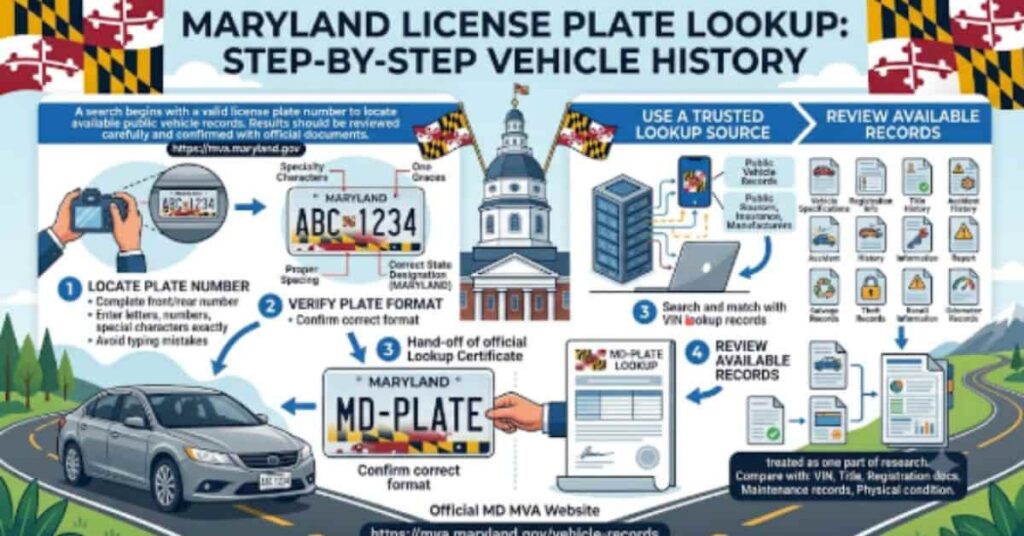
A Maryland License Plate Search begins with a valid license plate number and uses it to locate available public vehicle records. The results should be reviewed carefully, and important information should be confirmed with official vehicle documents whenever possible. Performing a License Plate Lookup Maryland process is straightforward. A careful review of each step helps improve accuracy and reduces the chance of relying on incomplete or outdated information.
For registration or title matters, important details should always be confirmed through the Maryland Vehicle Administration (MVA): https://mva.maryland.gov.
Locate the License Plate Number
Find the complete license plate number displayed on the front or rear of the vehicle, depending on where the plate is mounted. Enter every letter, number, and special character exactly as shown.
Small typing mistakes can produce incorrect results or no records at all.
Verify the Plate Format
Before beginning the search, confirm that the plate number matches the correct Maryland format.
Check for:
- Correct letters and numbers
- Proper spacing, if required
- Specialty or personalized plate characters
- State designation
Use a Trusted Lookup Source
Choose a reliable source that searches public vehicle records and related databases. Informational websites explain the lookup process, while record providers may compile data from public sources, insurance records, manufacturers, and other databases. A lookup typically searches available information connected to the license plate and, where possible, matches it with the vehicle’s VIN lookup records to provide broader vehicle history.
Review Available Records
After entering the plate number, review all available information carefully.
Depending on record availability, the report may include:
- Vehicle specifications
- Registration-related information
- Title history
- Accident history
- Salvage records
- Theft records
- Recall information
- Odometer records
Confirm Important Details
A license plate lookup should be treated as one part of the research process. Before purchasing or selling a vehicle, compare the report with:
- The vehicle’s VIN
- Vehicle title
- Registration documents
- Maintenance records
- Physical condition of the vehicle
What Information Can Be Found?
A Maryland license plate lookup can reveal many public vehicle records linked to a license plate. The available details often include vehicle specifications, registration status, title history, accident records, recalls, and other public data, though private owner information stays protected by law. The exact results depend on the data source used and the records available for a specific vehicle. Some reports provide basic vehicle details, while others include historical records collected from government databases, insurance records, manufacturers, and other public sources. Many lookup services match the license plate with the vehicle’s VIN to collect more detailed vehicle records and create a complete vehicle history report.
Vehicle Specifications
Vehicle specifications identify the basic features of a vehicle. These details help confirm that a vehicle matches its registration records and can reduce the chance of buying a vehicle with incorrect information.
A typical lookup may include:
- Make (manufacturer)
- Model
- Model year
- Engine size and engine type
- Body style (sedan, SUV, pickup, coupe, hatchback, van, and more)
- Fuel type (gasoline, diesel, hybrid, electric, or alternative fuel)
- Transmission type
- Drive type
- Exterior color, when available
- Manufacturing country
These vehicle specifications allow buyers and owners to compare the listed information with the actual vehicle. Any major difference between the report and the vehicle itself deserves closer inspection before completing a purchase.
| Vehicle Detail | Possible Information |
|---|---|
| Make | Vehicle manufacturer |
| Model | Vehicle model name |
| Year | Model year |
| Engine | Engine size and configuration |
| Body Style | Sedan, SUV, Truck, Coupe, Van, etc. |
| Fuel Type | Gasoline, Diesel, Hybrid, Electric |
Registration Information
Registration records show whether a vehicle is currently registered and may include other public registration details. The amount of information available depends on the reporting source and state record availability.
Common registration details include:
- Registration status (active, expired, suspended, or inactive)
- Registration class
- Registration type
- Registration issue date, when available
- Registration expiration, if publicly available
A current registration status helps confirm that a vehicle has valid registration records. Buyers often review this information before completing a private sale. Registration details can support other public vehicle records, though they do not replace official registration documents issued by the state.
Vehicle History
A vehicle’s past often reveals more than its appearance. A vehicle history report combines records from multiple public and commercial databases to show important events during the vehicle’s lifetime.
Depending on available records, a lookup may include:
- Title history
- Previous title transfers
- Accident history
- Insurance loss records
- Salvage title records
- Rebuilt vehicle records
- Theft reports
- Recovery records
- Flood or major damage records
- Odometer records reported during inspections, title transfers, or sales
These records help identify vehicles that have experienced serious damage or major ownership changes. A clean exterior does not always reflect a clean history, making title history and accident history valuable during used vehicle research.
Manufacturer Information
Manufacturer data provides valuable facts directly related to the vehicle as it was built. This information helps owners verify factory equipment and identify safety concerns.
Manufacturer-related information may include:
- Open recalls
- Manufacturer recalls
- Factory-installed equipment
- Original factory specifications
- Safety features
- Trim level
- Engine configuration
- Standard and optional equipment
Maryland License Plate Lookup vs VIN Lookup
A Maryland License Plate Lookup starts with a vehicle’s license plate number, while a VIN Lookup uses the vehicle identification number assigned by the manufacturer. Both search methods help review vehicle history, though each offers different strengths depending on the available information.
A license plate search works well when only the plate number is available, such as during a parking lot inspection or a private vehicle sale. A VIN search provides a more detailed record since the vehicle identification number remains with the vehicle throughout its lifetime, even if the license plate changes. Many professional vehicle database services use both identifiers together to build a more complete report.
Maryland License Plate Lookup vs VIN Lookup
| Feature | License Plate Lookup | VIN Lookup |
|---|---|---|
| Search Input | License plate number | Vehicle Identification Number (VIN) |
| Best For | Identifying a vehicle using its current plate | Reviewing detailed vehicle records |
| Vehicle Specifications | Available in many reports | Usually more detailed |
| Registration Information | Often available | May be available through linked records |
| Vehicle History | Available when records exist | Usually more complete |
| Title History | May be included | Frequently included |
| Accident History | May be included | Often more detailed |
| Recall Information | May be available | Commonly available through VIN records |
| VIN Decoder Support | No | Yes |
| Plate Changes | Records may change if the plate changes | VIN remains the same for the life of the vehicle |
Differences
The biggest difference is the search identifier.
A License Plate Lookup starts with the registration plate currently assigned to the vehicle. It works well when the VIN is not visible or unavailable. The search may return public vehicle history, registration-related information, and basic vehicle specifications if matching records exist.
A VIN Lookup uses the unique 17-character vehicle identification number assigned during manufacturing. Since the VIN stays with the vehicle for its entire life, it provides a more consistent way to track title changes, accident records, recalls, and other historical data.
Benefits
A License Plate Lookup offers several advantages:
- Useful when only the plate number is known.
- Helps identify basic vehicle details.
- Can return public registration-related records.
- Supports used vehicle research before purchase.
A VIN Lookup offers different strengths:
- Provides a detailed vehicle history in many cases.
- Works with a VIN decoder to identify factory specifications.
- Tracks title transfers more accurately.
- Shows manufacturer recalls linked to the VIN.
- Makes it easier to verify vehicle identity.
Limitations
Both lookup methods have limits.
A license plate can change after a vehicle is sold, moved to another state, or re-registered. This means older records may not always connect to the current plate. A VIN search depends on accurate reporting from government agencies, manufacturers, insurance companies, repair facilities, and other record providers. If an event was never reported, it may not appear in the results.
When to Use Each
A License Plate Lookup is a good choice when:
- Only the license plate number is available.
- A buyer wants a quick review before contacting a seller.
- Basic registration-related details need verification.
A VIN Lookup is a better option when:
- The VIN is available from the dashboard or driver’s door.
- A buyer wants a complete vehicle history before purchasing.
- Factory specifications or VIN decoder details need verification.
- Title records, accident history, or recall information require a deeper review.
Can You Check Registration Status?
Yes, a Maryland License Plate Lookup may show a vehicle’s registration status when public registration records are available. For official verification, renewal, or registration updates, the information should always be confirmed through the Maryland Motor Vehicle Administration (MVA).
The registration status shows whether a vehicle’s registration is currently active or if there is a condition affecting its legal use on public roads. This information can help buyers, sellers, and vehicle owners confirm basic registration details before completing a transaction or reviewing a vehicle’s records.
Maryland Motor Vehicle Administration (MVA) Website: https://mva.maryland.gov
What Registration Status Means
A vehicle’s registration confirms that it has been recorded with the state and is authorized for road use, provided all legal requirements have been met. A lookup may display one of several registration conditions, including:
- Active registration
- Expired registration
- Suspended registration
- Inactive registration
Information That May Be Available
Depending on the source of the registration records, a lookup may include:
- Registration status
- Registration class
- Registration type
- Registration issue date
- Registration expiration, when publicly available
- Basic vehicle information linked to the registration
The amount of information varies by record source. Some services provide only basic registration details, while others combine registration data with broader vehicle history records.
Limitations
A public lookup does not provide complete registration files. Private owner names, home addresses, driver’s license details, insurance information, and other protected personal data are not included. Public records may not reflect the most recent changes immediately. Registration renewals, transfers, or updates can take time to appear across different databases.
Can You Find the Vehicle Owner?
No, a public Maryland License Plate Owner Lookup cannot reveal the name, address, or other personal details of a vehicle owner. Federal and state privacy laws, including the Driver’s Privacy Protection Act (DPPA), restrict public release of personal information from motor vehicle records. Many people search for an Owner Lookup after seeing a parked vehicle, buying a used car, or reporting an incident. Public license plate searches can return vehicle-related information, yet they do not provide private owner details. The Maryland Motor Vehicle Administration (MVA) protects personal data and releases it only in situations allowed by law.
Maryland License Plate Request Records: https://mva.maryland.gov/pia-request-driving-record-information
Why Owner Information Is Restricted
The Driver’s Privacy Protection Act (DPPA) is a federal law that limits how personal information from motor vehicle records can be collected, shared, and used. It protects information such as:
- Vehicle owner’s name
- Home or mailing address
- Date of birth
- Driver’s license number
- Social Security number
- Photograph and other identifying details
Who Can Legally Request Owner Information?
Owner information is available only for approved purposes defined by law. Depending on the circumstances, authorized requests may be made by:
- Government agencies
- Law enforcement agencies
- Courts handling legal proceedings
- Insurance companies processing claims
- Licensed businesses with a DPPA-approved purpose
- Vehicle owners requesting their own records
- People or organizations with the owner’s written authorization
What a Public Lookup Can Show
A public license plate search focuses on vehicle-related data rather than personal identity. Depending on available public records, it may include:
- Vehicle make and model
- Model year
- Basic vehicle specifications
- Registration-related information
- Title history
- Accident history
- Recall information
- Salvage or theft records, when available
How to Request Records Lawfully
Anyone seeking records for a lawful purpose should follow the procedures established by the Maryland Motor Vehicle Administration (MVA). Record requests may require proof of identity, written authorization, a subpoena, or another legally recognized reason before protected information can be released. The MVA provides instructions for requesting eligible records and explains the limits placed on personal information by the DPPA.
When Should You Use a License Plate Lookup?
A Vehicle Lookup is useful when someone wants to review public vehicle information before making a decision. A Plate Search can help confirm vehicle details, identify potential issues, and support research without revealing protected owner information. A license plate lookup serves many practical purposes. It provides public vehicle history and vehicle-related records that can help users verify information before buying, selling, or researching a vehicle.
Situations for Using a License Plate Lookup
A buyer can compare the seller’s description with available records. Reviewing vehicle history may reveal previous accidents, title changes, salvage records, or open recalls that deserve closer attention.
Selling a Vehicle
A seller can review public vehicle information before listing a vehicle. Accurate details about the make, model, year, and specifications help create a reliable listing.
Checking Safety Recalls
A lookup may identify manufacturer recall records linked to the vehicle. Buyers and owners can use this information to determine whether safety repairs may still be needed.
Verifying Vehicle Specifications
Vehicle specifications such as the make, model, engine, body style, and fuel type can be compared with the actual vehicle. This helps confirm that the vehicle matches its recorded information.
Research Purposes
Insurance professionals, automotive businesses, researchers, and vehicle owners often perform a Vehicle Lookup to review public records, compare vehicles, or collect background information for lawful purposes.
Frequently Asked Questions
Below are answers to some of the most common questions about Maryland License Plate Lookup, including registration status, vehicle history, VIN searches, owner privacy, and the legal use of license plate records. These FAQs help clarify what information is available, what remains protected by law, and how to use a license plate lookup correctly.
Is Maryland license plate lookup free?
Yes, some basic information may be available at no cost, depending on the source being used. Free searches often provide limited details, such as the vehicle’s make, model, model year, or body style. More detailed reports, including vehicle history, title records, accident records, salvage history, and manufacturer recall information, are commonly available through commercial data providers. The amount of information varies based on the records available for a specific vehicle.
Can I find the owner’s name with a Maryland license plate lookup?
No. A public Maryland license plate lookup does not reveal the name, address, phone number, or other personal information of a vehicle owner. These records are protected by the Driver’s Privacy Protection Act (DPPA) and Maryland privacy laws. Personal information may only be released for approved legal purposes to authorized parties, such as law enforcement agencies, courts, insurance companies, or others who meet legal requirements.
Can I check accident history with a license plate lookup?
Yes, if accident records are available. Many vehicle history reports include reported collisions, insurance loss records, structural damage, flood damage, or other significant incidents. Keep in mind that not every accident is reported to public or commercial databases. Minor damage repaired without an insurance claim or official report may not appear in the vehicle’s history. For that reason, a vehicle inspection remains an important step before purchasing a used vehicle.
Can I check open recalls through a license plate lookup?
Yes, in many cases. A lookup may identify manufacturer safety recalls connected to the vehicle after matching the license plate with its VIN.
Open recalls can involve important safety components, including:
- Airbags
- Braking systems
- Steering components
- Electrical systems
- Fuel systems
Can I verify registration status?
Yes, a lookup may display basic registration information, including the current registration status when public records are available.
Some reports may include:
- Active or expired registration
- Registration class
- Registration type
- Registration expiration, when publicly available
Is a VIN lookup better than a license plate lookup?
It depends on the information available. A license plate lookup works well when only the plate number is known. It provides a convenient starting point for reviewing public vehicle records. A VIN lookup often provides a more complete vehicle history since the Vehicle Identification Number stays with the vehicle throughout its lifetime, even if the license plate changes. Many buyers use both searches together before purchasing a used vehicle.
Is a Maryland license plate lookup legal?
Yes. Performing a Maryland license plate lookup is legal when it is used for lawful purposes and relies on publicly available vehicle records. The information returned through public searches is limited by federal and state privacy laws. Personal owner information remains protected under the DPPA and cannot be released through public lookup services.