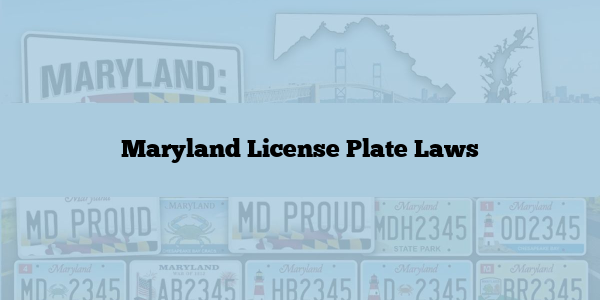
Maryland License Plate Laws dictate specific rules for displaying, maintaining, and registering vehicle identification tags within the state. Every driver operating a motor vehicle must follow these Maryland Plate Laws to ensure full compliance with state traffic regulations. Failing to adhere to Maryland License Plate Regulations can lead to unwanted traffic citations and financial penalties. This guide breaks down the exact requirements set by the Maryland Motor Vehicle Administration.
Readers will learn the precise Maryland Tag Laws regarding front and rear plate visibility, mounting hardware, and sticker placement. We will detail the process for new registrations, renewal procedures, and temporary transit permits issued by authorized dealers. Information covering personalized, historic, and military tags provides clarity for drivers seeking custom options. By the end, you will hold accurate knowledge regarding every aspect of vehicle registration and plate display.
Maryland License Plate Requirements
Maryland License Plate Requirements demand strict adherence to the state vehicle code to avoid traffic citations. Drivers must follow precise rules regarding visibility, placement, and physical maintenance of their assigned tags. Failing to meet these standards results in immediate penalties during a traffic stop.
Display Requirements
- Every standard passenger vehicle must display a rear plate and a front plate securely fastened to the manufacturer’s designated areas.
- The rear plate must maintain absolute visibility, free from dirt, mud, or any physical obstruction that hides the characters.
- Traffic regulations prohibit placing the tags inside the windshield or on the dashboard.
- Tags must attach externally to the vehicle’s bumper or bracket to remain compliant with Maryland Plate Laws.
Registration Sticker Rules
- Maryland transitioned away from issuing metal plate stickers, moving instead to an electronic verification system.
- Drivers receive a printed registration card instead of a traditional renewal decal for the tag itself.
- Law enforcement officers read the plate number through automated scanners to confirm active registration.
- You must keep the paper registration certificate inside the vehicle to prove current status during a traffic stop.
Lighting Requirements
- Maryland vehicle code requires a white light to illuminate the rear registration plate during hours of darkness.
- The light must make the characters legible from a standard distance of fifty feet.
- Using colored lenses or extremely dim bulbs violates Maryland License Plate Regulations.
- Officers routinely check rear lighting during nighttime traffic stops to ensure proper vehicle identification.
Mounting Hardware Rules
- Drivers must use standard bolts or screws to secure the registration plate to the vehicle frame.
- Using wire, zip ties, or tape to attach a tag violates state traffic laws.
- The mounting hardware must not obscure any letters, numbers, or the state name printed on the plate.
- If the factory bracket breaks, the vehicle owner must replace it immediately to maintain legal compliance.
- For official guidelines on hardware and display, visit https://mva.maryland.gov/
Front License Plate Laws in Maryland
Front License Plate Maryland rules are strict regarding the display of front-facing identifiers. A Maryland Front Plate Requirement applies to the vast majority of passenger cars, trucks, and SUVs registered for standard street use. Law enforcement relies on the front tag for immediate vehicle compliance checks, toll camera captures, and Amber Alert identifications. Failing to mount the front tag correctly results in a traffic citation carrying a financial fine.
Very few exceptions exist to this mandate. Certain historic vehicles, motorcycles, and trailers operate legally with only a rear plate due to their specific design limitations. Simply removing the front bracket for aesthetic reasons does not qualify as a valid exemption. Maintaining vehicle compliance means securing the front tag firmly using standard bolts. To verify exemptions, check the official portal at https://mva.maryland.gov/title-registration/register-vehicle
Registration & License Plate Regulations
Maryland Vehicle Registration Laws govern the entire lifecycle of your tags from the initial purchase to the final disposal. Failing to follow these administrative rules leads to suspended driving privileges and heavy fines. Drivers must manage their paperwork diligently to keep their vehicles legally operational on state roads.
New Registration
- When you buy a car, you must title and register it through the Maryland Motor Vehicle Administration within 30 days.
- This process assigns a specific registration plate to your vehicle and links it to your active insurance policy.
- You will receive a temporary registration if the physical metal tags are not immediately available at the dealership.
- The administration verifies your proof of insurance electronically before issuing the permanent tags.
Registration Renewal
- Registration Renewal happens annually or biennially, depending on your chosen payment plan.
- The administration sends out renewal notices before your current term ends to remind you of the deadline.
- You can complete the renewal process online, by mail, or in person at a local branch.
- Paying the renewal fee on time ensures your electronic record remains active and avoids flagging by police scanners.
- Manage your renewal status online at https://mva.maryland.gov/appointments-online-services/online-services.
Expired Registration
- You cannot legally drive with an Expired Registration, as the system automatically flags your plate as invalid.
- Driving on an Expired Registration invites heavy fines and potential vehicle impoundment.
- If an officer pulls you over and discovers an expired status, they will issue a citation on the spot.
- The state charges late fees that increase the longer you wait to renew your registration certificate.
- Contact the MVA via email at MVACustomerService@mdot.maryland.gov to resolve complex expiration issues.
Temporary License Plate Laws
A Temporary License Plate serves as a legal transit permit when a newly purchased vehicle lacks permanent metal tags. Dealers issue a dealer tag made of cardboard or paper, displaying a specific temporary registration number and a strict expiration date. Maryland law dictates that these temporary tags must remain clearly visible in the rear window of the vehicle. Driving legally requires strict adherence to the printed expiration date. Extending a temporary registration beyond this date is illegal without formal authorization. Law enforcement officers scrutinize dealer tags heavily to prevent fraud. The numbers must remain legible, unaltered, and free from tape or glare. If your permanent registration plate arrives after the dealer tag expires, you must obtain an extension directly from the administration. For questions regarding the validity of a transit permit, visit https://mva.maryland.gov/ or email MVACustomerService@mdot.maryland.gov.
Personalized & Specialty Plate Regulations
Maryland License Plate Laws allow drivers to customize their vehicles through various specialized programs. A Personalized License Plate, often called a vanity plate, lets you choose a specific combination of letters and numbers. The administration reviews your request to ensure the custom plate does not contain offensive language or duplicate an existing tag. Beyond vanity options, drivers can select from dozens of organizational plates supporting universities, charities, or local causes. Specialty License Plates cost slightly more than standard tags, with a portion of the fee going directly to the affiliated organization. These tags follow the exact same display requirements and mounting rules as standard issue plates. Vehicle owners with older cars may qualify for Historic Plates if the vehicle is at least 20 years old and used only for exhibitions.
License Plate Violations & Penalties
Breaking Maryland License Plate Laws results in strict financial penalties and potential court appearances. Law enforcement officers treat any tag-related issue as a serious traffic violation because it directly impacts vehicle identification. Driving without plates entirely is a severe infraction that requires you to appear in traffic court. Improper display occurs when a driver mounts the rear plate at an angle or fails to secure the front plate. Using fake plates or altered tags constitutes a criminal offense linked to stolen vehicles or insurance fraud. A court judge will impose massive fines and possible jail time for counterfeit registration plates. Covered plates and damaged plates also invite citations from traffic enforcement. Many drivers accidentally obscure their tags with bike racks or dirty license plate frames. Law enforcement requires every character on the tag to be fully visible at all times. Ignoring a damaged plate results in a fine for failing to maintain vehicle compliance.
| Violation Type | Nature of Offense | Typical Consequence |
|---|---|---|
| Missing Front/Rear Plate | Failure to display required tags | Traffic citation and fine |
| Obstructed/Covered Plate | Frame or rack hides letters/numbers | Citation requiring correction |
| Altered/Fake Plates | Changing numbers or using counterfeit tags | Arrest, court appearance, heavy fine |
| Unreadable/Damaged Plate | Rust or cracks obscure vehicle identification | Citation and mandatory replacement |
License Plate Transfer Rules
Maryland License Plate Laws treat the registration plate as belonging to the registered owner, not the vehicle itself. When selling a vehicle, you must remove the plates before handing the keys to the buyer. The buyer cannot drive away using your tags, as this violates ownership transfer rules. You have the option to transfer your existing plates to a newly purchased vehicle. This is allowed provided the new car is registered in your name and falls into the same vehicle class. To execute a legal registration transfer, you must complete the paperwork within 30 days of purchasing the new car. Family transfer rules allow parents or spouses to move plates between vehicles under different names. This specific process requires documentation proving the family relationship to the administration.
Mistakes Drivers Make
Traffic enforcement officers regularly issue citations for simple, avoidable errors regarding registration compliance. Drivers must remain vigilant to avoid these frequent pitfalls that lead to unnecessary fines.
- Driving with expired plates because the owner ignored the mailed renewal notice.
- Placing a registration sticker on the wrong corner or using a sticker from a previous year.
- Installing aftermarket license plate frames that partially cover the state name or registration numbers.
- Failing to return plates to the administration after selling a vehicle or dropping insurance.
If you cancel your insurance without surrendering the tags, the administration suspends your driving privileges. Always remove obstructive frames, return unused tags, and maintain active insurance to stay compliant. For help returning tags, email MVACustomerService@mdot.maryland.gov.
Frequently Asked Questions
Drivers often have specific questions regarding the nuances of Maryland traffic laws. The following section addresses the most common inquiries about vehicle identification rules.
Is a front plate required in Maryland?
Yes. Maryland vehicle code mandates that standard passenger vehicles display two license plates. One must mount on the front bumper and one on the rear bumper. Failing to mount the front plate results in a traffic citation. Motorcycles and certain historic vehicles represent the only exceptions.
Can I drive without plates if I just bought the car?
You can only drive without permanent metal plates if the dealer issued a valid temporary cardboard tag. This dealer tag must display an unexpired date and remain visible in the rear window. Driving a newly purchased car with absolutely no tags violates state law.
Can I transfer my plates to a new car?
Yes. Maryland allows you to transfer your current registration plate to a newly acquired vehicle. The new vehicle must fall into the same registration class as the old one. You must complete the registration transfer process through the administration within 30 days.
How much is the fine for a license plate violation?
Fines vary based on the specific violation. A minor offense, like an obstructed frame, typically carries a fine around $60 to $90. Severe infractions, such as driving without any plates or using counterfeit tags, can result in fines exceeding $500.
Can I use damaged plates?
No. Maryland law requires all registration plates to be fully legible. If your plate suffers from heavy rust, peeling paint, or cracks, you must apply for a replacement. Officers will issue a citation if they deem your current plate unreadable.
When should I renew my registration?
You must renew your registration before the exact expiration date listed on your current registration card. The Maryland Motor Vehicle Administration sends out notices weeks in advance. You can complete the renewal online to ensure your electronic record stays active.